.png)
How to Design a Cohesive Living Room (That Actually Flows)


If your living room feels “off,” but you can’t explain why—you’re not alone.
Most homeowners don’t struggle because they lack style.
They struggle because the room doesn’t feel connected.
The furniture might look nice on its own. The colors might work individually. But together, the space feels disconnected, unfinished, or slightly uncomfortable to be in.
That’s usually a cohesion problem—not a decorating problem.
At Creating Our Forever, we focus less on individual pieces—and more on how everything works together.
Here’s how to start thinking about your living room the same way.
1. Start With the Layout—Not the Furniture
Most people make this mistake immediately: They start buying furniture before deciding how the room should function.
A cohesive living room starts with intentional layout.
Ask yourself:
Where do people naturally gather?
What is the focal point? (TV, fireplace, windows?)
How do people move through the space?
If your layout is off, no amount of styling will fix it.
Simple Fix:
Before buying anything, map your space:
Identify walkways
Anchor the main seating area
Avoid pushing everything against the walls
A well-planned layout creates the foundation for everything else.
2. Define the Space With Anchors
In many homes—especially open floor plans—rooms feel disconnected because nothing is visually grounding the space.
Anchors create structure and clarity.
Key Anchors to Use:
Area rugs
Coffee tables
Sofas or sectionals
Common Mistakes:
Rugs that are too small
Floating furniture with no center
Pieces that don’t relate
Simple Fix:
Your rug should be large enough that:
At least the front legs of your furniture sit on it
It visually connects the seating area
3. Keep Scale and Proportion Consistent
A room can feel “off” even if everything is beautiful—simply because the sizes don’t work together.
Common Issues:
Oversized couch + tiny table
Small rug in a large room
Bulky furniture in tight spaces
Simple Rule:
Each piece should feel balanced—not identical, but intentional.
4. Limit Competing Styles
Trying to combine too many styles creates visual confusion.
Example:
Modern couch
Rustic table
Traditional lighting
Simple Fix:
Choose a primary style direction, then layer subtle variation.
The goal is a room that feels intentional—not accidental.
5. Focus on Flow Between Spaces
Your living room shouldn’t feel separate from the rest of your home.
Ask:
Does this room connect visually to the next?
Are materials or colors repeated?
Simple Fix:
Repeat elements like:
Wood tones
Metal finishes
Accent colors
This creates continuity throughout the home.
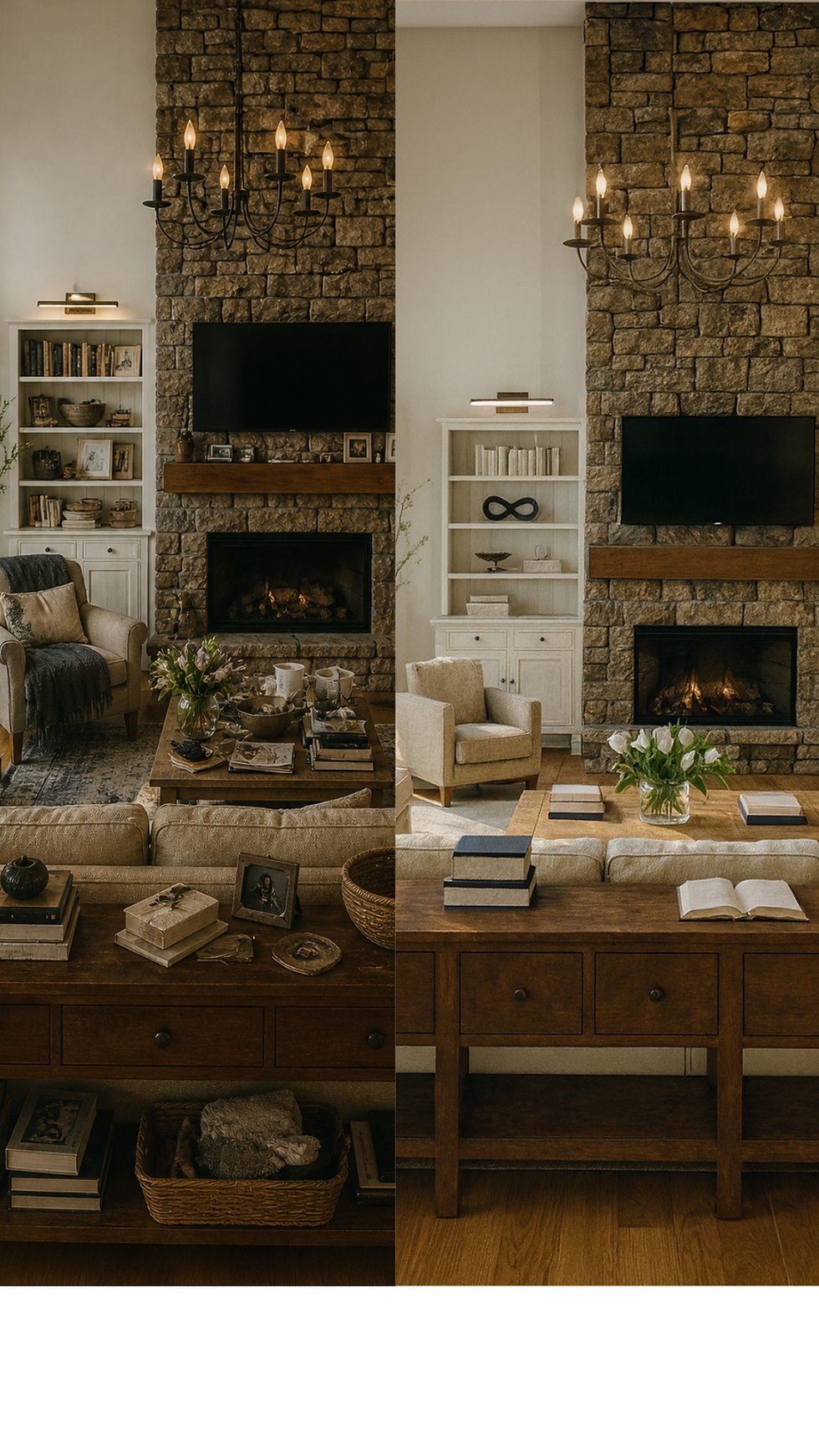
6. Edit More Than You Add
Sometimes the best improvement is removing things.
Too many items create visual noise—even if they’re nice individually.
Simple Rule:
If it doesn’t serve the space, it doesn’t need to be there.
What a Cohesive Living Room Feels Like
When everything works together, the difference is immediate.
The room feels:
Calm
Balanced
Easy to move through
Naturally inviting
Not because it’s perfect—but because it makes sense.
Final Thought
Designing a cohesive living room isn’t about finding the “right” furniture.
It’s about:
How the space functions
How pieces relate
How the room connects to the rest of your home
That’s what turns a space from decorated into finished.
At Creating Our Forever, we focus on designing homes that feel cohesive, functional, and truly complete—not just styled.
If your space feels off and you’re not sure why, we offer virtual consultations to help you:
Fix layout issues
Create flow
Make confident design decisions
👉https://www.creatingourforever.com/contact
Comments